Monday, March 2, 2020

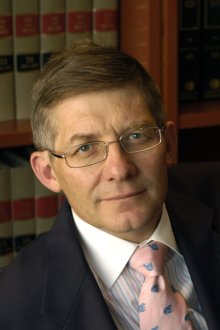
Bathurst CJ's grasp of the facts of matters he publicly discussed were shown to be illusory, at best, by historian Windschuttle in The Quadrant:More reasons why Andrew Bell, President, Court of Appeal should be appointed Acting Chief Justice NSW immediately

by Ganesh Sahathevan


                                                      Chief Justice Tom Bathurst will save us from ourselves-Tim Blair, Daily Telegraph,2017


In 2017 the highly regarded Quadrant magazine published an article by historian Keith Windschuttle about a speech made by NSW Chief Justice Tom Bathurst. The article included the following comments:

However, Bathurst’s account of the Afghan affair leaves a lot to be desired. Had he done a little more research into the newspaper reports and parliamentary debates of the day (all now available online on Trove), to assess the reasons why the incident became a cause célèbre at the time, he might have found that Henry Parkes was not quite the populist villain he imagines

It is disappointing to see a Chief Justice succumbing to what is essentially a fictional left-wing historical trope more at home in the sleazy halls of our universities’ humanities departments than in our Supreme Courts.

Bathurst’s account of these events clearly reflects his desire to make a political point, not just in favour of the rule of law as it was applied 129 years ago, but also against politicians in our own time who might appeal to “popular sentiment”, that is, who invoke populist prejudices against people of a different race.

The article in still available on the Quadrant website, is free to read and has been reproduced in full below

Any judge, let alone a chief justice, who has his grasp of the facts ridiculed in such a public manner cannot be said to have the confidence of the public, especially when he chooses not to correct the record. To be then shown to have  misrepresented  the facts while pursuing a political agenda calls into question his appreciation of his duties in upholding the law.

The above was reported in 2017 and it also provides an example which illustrates why Mr Bathurst's undermining Fagan J must be seen as yet another example of poor judgement.
This also adds to the reasons why Mr Bathurst ought to step down immediately and the President Of The Court Of Appeal Andrew Bell be appointed Acting Chief Justice. 

END 

To Be Read With:


Nationalist Illusions

19th April 2017
Comments (7)


Keith Windschuttle

Editor-in-chief
Editor, Quadrant Magazine
keithwindschuttle@quadrant.org.au


The inauguration of Donald Trump as 45th President of the United States brought forth a spate of Australian commentary deploring his views as “nationalist”. Former Labor foreign minister and New South Wales Premier, Bob Carr, said the election of “a loudmouth nationalist” to the White House meant Australia should reappraise its international alliances and adopt a new foreign policy stance: “More Asia. Less US.” The Greens declared themselves appalled at Trump’s election and “the politics of racism, misogyny and nationalism that Donald Trump represents”. Left-wing Perth academic Johan Lidberg summed up in New Matilda, saying Trump’s inauguration was symptomatic of a malaise sweeping the planet, not only in the US and post-Brexit UK but also in France, Sweden, Norway, Denmark, Holland, Austria, Poland, Hungary and, of course, Australia via Pauline Hanson’s One Nation. “The common denominators,” Lidberg wrote, “are nationalism and xenophobia. Has the mix of strong nationalism and fear of the other ever brought the world anything but conflict? The answer is no.”

The use of “nationalist” as a pejorative term is nothing new. I have written in these pages often enough that left-wing academics have long misused the notion that Australian history has harboured a deeply entrenched racist nationalism since the country was founded. During the so-called Cronulla Riots between Muslim and Anglo youths in 2005, the University of Melbourne feminist historian Marilyn Lake mocked the New South Wales Police Commissioner for saying those involved were un-Australian. “What is un-Australian about calling for racial exclusion in the name of the nation?” she asked. “Is not racial exclusion a deep part of our heritage, as traditional an Australian value as mateship?”

Nonetheless, I was still surprised to see the New South Wales Chief Justice, Tom Bathurst, coming out in support of similar sentiments. Bathurst spoke on February 2 in the middle of the Trump furore and only a few days after two prominent voices, former Howard government minister Ian Macfarlane and former Labor Party president Warren Mundine, both made appeals in the press for Australia Day to be shifted from January 26, the anniversary of the First Fleet’s landing, to a date supposedly less offensive to the Aboriginal political class. Opening the new law term, Bathurst drew on another contentious issue in Australian history to demonstrate where he stood.

Bathurst cited the “Afghan affair” of 1888 to demonstrate how “one of the most serious threats to the rule of law in Australia was grounded in xenophobia”. In a thinly veiled comparison with Donald Trump, Bathurst said the New South Wales Premier in 1888, Henry Parkes, used “inflammatory language that we are perhaps not unfamiliar with today”, in a racist bid to prevent Chinese passengers disembarking from a ship, the Afghan, in Sydney Harbour and to permanently bar all other Chinese from entry. As Bathurst tells the story, Parkes defied a Supreme Court decision that the detention of the Afghan’s passengers was illegal and instructed his police force not to allow them ashore.

The Parkes government, Bathurst says, “maintained this defiance of the rule of law for a considerable period of time, leading Chief Justice Darley to admonish the government’s actions as unprecedented and in flagrant disregard of the law”. Eventually, the government conceded and allowed the detainees to land. According to Bathurst, the incident was a victory for the wiser heads of the legal profession against the baser instincts of populism. It “demonstrates the role of the judiciary and the profession in promoting equality, fairness and the rule of law, in spite of popular sentiment”.
This essay appeared in a recent edition of Quadrant.
Click here to subscribe

Bathurst’s account of these events clearly reflects his desire to make a political point, not just in favour of the rule of law as it was applied 129 years ago, but also against politicians in our own time who might appeal to “popular sentiment”, that is, who invoke populist prejudices against people of a different race.

However, Bathurst’s account of the Afghan affair leaves a lot to be desired. Had he done a little more research into the newspaper reports and parliamentary debates of the day (all now available online on Trove), to assess the reasons why the incident became a cause célèbre at the time, he might have found that Henry Parkes was not quite the populist villain he imagines.

The Afghan arrived in Australian waters in April 1888 with 268 Chinese passengers, half destined for New Zealand, the rest for Melbourne and Sydney. It first tried to land in Melbourne, where sixty passengers presented sets of naturalisation papers to verify their status as domiciled Victorians returning from overseas visits. Customs authorities found forty-eight of the papers were forgeries. Faced with a heavy fine if he landed illegal immigrants, the Afghan’s captain upped anchor and headed for Sydney.

At the time, illegal immigration had become a major colonial scandal. Customs officers had recently unearthed a traffic in naturalisation papers, including one case of 600 sets of forged papers which gave Chinese illegal entry. This practice, it is worth noting, was not uniquely Australian but was a common phenomenon on the west coast of the United States too.

At the same time, deputations to both the New South Wales and Victorian parliaments sought relief work for the growing number of unemployed in both colonies, and a reduction in immigration numbers. When news of the Afghan’s pending arrival reached Sydney, the labour movement, led by trade union newspaper editor John Norton, called a public protest meeting on May 3. A crowd of 5000 then marched to Parliament House in Macquarie Street demanding the Chinese not be allowed to land.

Henry Parkes exploited the situation for his own political advantage, at least initially. When the ship reached Sydney on May 6, Parkes forbade any passengers to land, except some holding bona fide New South Wales naturalisation papers.

Within a week, three more ships, the Tsinan, the Guthrie and the Menmuir, steamed into Sydney Harbour carrying between them 531 Chinese passengers. Parkes also forbade them to land and, on May 16, introduced a new bill to the Legislative Assembly, increasing the Chinese entry tax from ten to one hundred pounds, reducing the number of Chinese immigrants permitted entry, and denying them future naturalisation. Given advice that some of these proposals were unlawful and would not be approved by the Colonial Office in London, Parkes rhetorically declared he would defy the Crown and sever the British connection.

In the meantime, pro-Chinese lobbyists went to the New South Wales Supreme Court, where they argued that several of the passengers on the ships were Australian-resident Chinese who held valid exemption certificates and other papers. The Supreme Court agreed with the applicants. It held Parkes’s action was unlawful, those passengers still on the ships were illegally detained, and those with exemption certificates should be allowed to land.

Rather than defy the law for “a considerable period of time”, Parkes quickly acceded to the court’s authority. On May 19, three days after pushing his bill through Parliament, he changed his mind so that forty-two passengers from the Afghan and eight from the Tsinan who held the proper documents could land. Other would-be immigrants who were prepared to pay the entrance tax disembarked soon after. Once he had overcome his initial rush of blood to the head, Parkes took a conciliatory position. He set up a three-man board, with Sydney’s influential Chinese merchant Quong Tart one of its members, to provide compensation to those Chinese passengers who had exhausted their funds or otherwise suffered through the events.

In other words, rather than a major crisis in which racism threatened the rule of law in New South Wales, the Afghan affair revealed legitimate grievances on both sides. Lawful immigrants and Australian-domiciled Chinese held aboard ship were inconvenienced for a short time—less than two weeks—but eventually compensated for their trouble. And rather than an uprising of populist white racism, the underlying cause of the Chinese hardship was their own countrymen’s widespread practice of illegal immigration.

In this, the Afghan affair of 1888 was almost a precise antecedent of the Tampa incident of August 2001 when the Howard government, faced with the rise of a formidable trade in people-smuggling, took dramatic action to shut down the business. John Howard was accused by many intellectuals, academics and lawyers of exploiting the racist fears of Australian rednecks to ensure his “dark victory” in the election of November that year.

In reality, Howard’s only crime was to be sensitive to his electorate and to recognise that, in an egalitarian immigrant society like Australia, the people electors despise most are queue-jumpers. This is a distaste most keenly felt by recent immigrants who have abided by the proper rules for entry. Popular opinion is also patriotic and strongly endorses the principle that governments have a duty to preserve national borders. Neither of these sentiments threatens the proper rule of law—in fact, they would not exist without it.

It is disappointing to see a Chief Justice succumbing to what is essentially a fictional left-wing historical trope more at home in the sleazy halls of our universities’ humanities departments than in our Supreme Courts.

Sunday, March 1, 2020

Andrew Bell, President, Court of Appeal can be appointed Acting Chief Justice NSW immediately to deal with judicial crisis created by the Chief Justice: Bathurst CJ's undermining Fagan J while promoting his own agenda not a one-off; Bathurst desire to insert himself in public debate damaged public perception of the judiciary' in 2017


                                                      Chief Justice Tom Bathurst will save us from ourselves-Tim Blair, Daily Telegraph,2017


by Ganesh Sahathevan


It was recently revealed on this blog that NSW Chief Justice Tom Bathurst undermined the authority of a brother judge of the Supreme Court, Desmond Fagan, by praising the work of the Muslim Legal Network NSW,despite the MLN publicly accusing Fagan of lacking fairness and failing to perform his role of administering justice impartially.

Additionally Bathurst seemed unconcerned that the MLN has on its website advice that can hinder the work of ASIO, Border Force and the AFP. That the MLN advice had been criticised by the minister concerned, Peter Dutton, also seemed not to bother the Chief Justice despite his duty to uphold the law. 


The Chief Justice's determination to insert himself into the public debate on immigration and jihadism has embarrassed the judiciary since at least 2017 (see commentary by Tim Blair in The Daily Telegraph below). His conduct at the MLN dinner in 2019 cannot therefore be considered an one-off. Then there is his belief in conspiracy theories, which seems to have led him to approve of the re-writing of the facts of  a reported decision of his own court. 


In the interest of preserving public confidence in the judiciary, Mr Bathurst ought to step down immediately. The President of the Court of Appeal, Andrew Bell, can be elevated to the position of Acting Chief Justice NSW while a suitable replacement is found.


END 


SEE ALSO 
Judges know best. They are more knowledgeable and caring than politicians. They are also more knowledgeable and caring than the voters who elect those politicians.
We know this because the state’s leading judge, Tom Bathurst, says so.
In a speech to the Opening of Law Term dinner, Chief Justice Bathurst declared it was the judiciary and not the government who can be relied upon to promote fairness and equality. Left to our own devices, and without the soothing touch of all-wise judges, Australians would apparently descend into rampant racism.
“It should give us pause that one of the most serious threats to the rule of law in Australia was grounded in xenophobia,” Chief Justice Bathurst said, much in the manner of his predecessor Jim Spigelman.
The chief justice’s speech will no doubt please that sector of our community which is essentially suspicious of and distrusting towards the majority of Australians. Bathurst reinforced this notion with a line about promoting equality, fairness and the rule of law “in spite of popular sentiment”.
Poor old popular sentiment always cops a bashing from the we-know-better brigade. This is frequently ill-considered. After all, popular sentiment led to stopping the people smuggling trade in our region – and therefore ending a murderous practice that cost around 1200 lives at sea during Labor’s six years of power.
Interestingly, the legal fraternity – those promoters of fairness and equality – even now forms a large part of the movement dedicated to ending Australia’s life-saving border security operations.
Chief Justice Bathurst reached all the way back to 1888 for one example of the judiciary’s wisdom over popular opinion. During that year the NSW Government ordered police to stop Chinese passengers getting off a ship which had docked in Sydney Harbour, only for the government to be eventually overruled.
The chief justice sees parallels between the events of 1888 and Australia’s current mood, at least in terms of then-NSW premier Sir Henry Parkes’s comments at the time.
Sir Henry is presently unable to respond, having been dead for more than 100 years, but we would submit that Australia has changed a great deal during the intervening period. We are now a multicultural, tolerant, educated and thoughtful people who are quite capable of seeking fair outcomes without being bossed into them.
If Chief Justice Bathurst would like to have more of a say in the state’s affairs, he is welcome to run for elected office.

Friday, February 21, 2020

The Muslim Legal Network 2020 Iftar :: Will Chief Justice Bathurst, AG Speakman and Gov Beazley be attending ,and again undermine Sup Crt Judge Des Fagan, Peter Dutton & NSW Minister for Counter Terrorism Anthony Roberts?

by Ganesh Sahathevan


From the Muslim Legal Network Facebook page 


Our Annual Ramadan Iftar Dinner does not occur without the support of our amazing sponsors. One of our gold sponsors and long time supporter of the Muslim Legal Network NSW is Birchgrove Legal.

A firm based in Sydney CBD, Birchgrove Legal have been servicing the community for many years, providing representation in legal, civil and a variety of specialist areas.

Find out more about the great work Birchgrove Legal does by visiting their FaceBook page or their website www.birchgrovelegal.com.au

We are thankful for their ongoing sponsorship


Wednesday, February 12, 2020

Will the Supreme Crt NSW next find that algo-trading programs had acted falsely, for shorting stocks before consulting company managers? Rural Funds decision has serious consequences for Australian investors, will prevent market from being fully informed, will interfere with price discovery

by Ganesh Sahathevan


Yesterday in the NSW Supreme Court Mr  Justice David Hammerschlag found that short sellers Bonita Research had issued false statements regarding their target the ASX listed  Rural Funds Management Ltd (RFM).The judge went on to describe Bonita's issuance of a report against  RFM and its shorting of RFM stock as "misleading" , "deceptive" and premised on information disseminated to the market that was "false".


Reporting the judgement the  SMH's Paul Kruger said:

Rural Funds Group achieved a comprehensive legal victory over Texas-based short-seller Bonitas Research on Wednesday, as the NSW Supreme Court found that allegations against the real estate investment trust were "false in material particulars or were materially misleading".
Bonitas sent RFG's share price plunging in August last year after it released a report alleging RFG's accounts included fabricated rental income and claiming the trust was ultimately worthless.
"I am satisfied that they knew or ought reasonably to have known that the statements and information were false in material particulars or were materially misleading. They did not care that they were false," said the judgment from Justice David Hammerschlag.
Hammerschlag seemed to have been particularly offended by the  fact that Bonitas did not seek comment from RFM's managers. The AFR  reported:

"Wiechert (Bonitas founder)  is no doubt a sophisticated operator. Yet, as has earlier been said, neither Bonitas nor Wiechert took the trouble to check with or enquire of RFM as to any of the matters which they broadcast. They had an obvious commercial interest in depressing the price. I have no difficulty in concluding that they did not care whether what they were saying was false."


However, Bonitas based their work on RFM's audited financial statements. That the Supreme Court NSW requires researchers and analysts to consult with company managers and directors  about what they mean by their representations in their audited financial statements is ridiculous; the investing public are meant to rely on those statements as the final word on a company's health.

Short sellers in particular have an important role to play in price discovery, issuing negative reports in markets where buy-side research dominates. In fact, Bonitas report forced RFM to issue additional statements, which further informed the market.

Hammerschlag's decision will consequently interfere with the free flow of market information, and with market efficiency. It is investors who will pay, in the form of higher costs in the process of price discovery.

The decision is also at odds with what is becoming, here in Australia and overseas, an increasingly automated market. 
One wonders what Hammerschlag and his fellow judges at the Supreme Court NSW might make of algorithmic share traders, who can short stocks based on signals which can include financial statement ratios,which can be adjusted accordingly depending on the weight assigned to the credibility or. quality of what has been reported. The programs, as one would expect, do not first invite company managers to tea before executing their cold and merciless trades.

END 


Postscript

In his 2014 paper Turner  raised the prospect of sell orders executed by algorithmic trading platforms  being found to be defamatory publication: 


Computer-generated practices such as automated search engines present new challenges that the law will need to meet. An important development in this respect is the emergence of algorithmic share trading. It not only challenges orthodox conceptualisations of shareholders and their behavior, but provokes difficulties in identifying an intention in specific acts of share trading for the purpose of corporate regulation. Justice Beach’s derivation of an intention in Trkulja indicates one way in which company law could develop in regulating the conduct of algorithmic share traders.

Sunday, February 9, 2020

Muslim Legal Network accused Sup Crt Judge Fagan of lacking fairness, failing to perform his role of administering justice impartially: Soon after his Chief Justice Tom Bathurst praised MLN for upholding the rule of law :" doing a good job, cannot see how you can do it better"


by Ganesh Sahathevan

The video excerpt above has been extracted  from the Muslim Legal Network's Facebook page. While the 2019 Iftar Dinner was held in May, the video at this link was only uploaded in November:


MLN (NSW) Iftar 2019 Highlights
If you missed out on attending our Ramadan Iftar Dinner earlier this year, dont miss out on this highlights ree


Chief Justice Tom Bathurst's words of praise for the MLN are intriguing given this attack on his bother Supreme Court judge, Desmond Fagan: 
“We and various other organisations have made it clear that the comments by his Honour *Judge Desmond Fagan)  were disappointing to say the least,” said Muslim Legal Network NSW president Sarah Khan. “The role of the judiciary is one of impartiality and fairness, and justice should be seen to be done.”

The position of the network that represents Australian Muslim legal practitioners is that Justice Fagan failed to perform his role of administering justice impartially, and rather, conflated crime and religion. And it warned this could lead to further Islamophobic attacks.

The context of the above statements is explained (in part) in the article below, bot that is not really relevant. In most jurisdictions that type of comment from lawyers would be considered a subversion of the judicial system.Lawyers can expect penalties to be imposed, by the courts and their respective professional bodies.
Not it seems in the eyes of Chief Justice Thomas Francis Bathurst, who has recently given a speech in which he expressed some difficulty in discerning community standards.
END 

  • BLOG
  • SUPREME COURT JUSTICE CRITICISED FOR DIVISIVE REMARKS ABOUT ISLAM

Supreme Court Justice Criticised for Divisive Remarks About Islam

15/02/2019 BY PAUL GREGOIRE
Supreme Court JusticeRemarks made by NSW Supreme Court Justice Desmond Fagan in relation to the interpretation of “hostile passages” in the Quran have caused outrage amongst the local Muslim community, as well as sparked calls from the NSW legal profession for greater understanding of Islam.


Justice Fagan said on the 31 January that a number of NSW and Victorian cases reveal that terrorists rely on Quranic verses “to support an Islamic duty of religious violence”. And unless “Australian Muslims who wish to live in peace” denounce these particular verses, this will continue.

“If Islam accepts the entire Quran as Allah’s eternal instruction to believers, without explicit repudiation of verses which ordain intolerance, violence and domination,” Mr Fagan posited, “that unqualified acceptance will embolden terrorists”.

The Supreme Court justice further claimed that it was beyond the reach of the courts and law enforcement to prove “terrorists’ perceived obligation of jihad” is false, so it’s up to Australian Muslims to assert that the violence inciting passages are “not authoritative instructions from Allah”.

Muslim group have stated that the judge’s conjecture about the religion they adhere to is out of his remit. And while he was present in the court to sentence two offenders convicted on terror-related charges, he wasn’t supposed to be casting doubt upon an entire religion.
Dividing the community

“We and various other organisations have made it clear that the comments by his Honour were disappointing to say the least,” said Muslim Legal Network NSW president Sarah Khan. “The role of the judiciary is one of impartiality and fairness, and justice should be seen to be done.”

The position of the network that represents Australian Muslim legal practitioners is that Justice Fagan failed to perform his role of administering justice impartially, and rather, conflated crime and religion. And it warned this could lead to further Islamophobic attacks.

According to the Muslim Legal Network NSW, “Australian Muslim leaders, religious scholars, community workers, lawyers and advocates have repeatedly rejected teachings relied upon to incite violence”.

Ms Khan further told Sydney Criminal Lawyers that her organisation “is working to find a solution to such narrative and is endeavouring to engage with relevant professional bodies in order to educate and discuss a way forward and better serve the Australian community”.
Conspiring to do acts

Justice Fagan made the remarks as he was sentencing Sameh Bayda and Alo-Bridget Namoa: the so-called “Islamic Bonnie and Clyde”. Last October, the pair were found guilty of conspiring to do acts in preparation for a terrorist act, contrary to section 101.6(1) of the Criminal Code (Cth).

The now 21-year-olds were charged with this offence – which carries a maximum penalty of life imprisonment – following the planning a violent street robbery of two non-Muslims that Bayda and two other men were going to carry out on New Year’s Eve 2015.

Mr Bayda backed out of the attack at the last minute. And the pair were subsequently arrested. Text messages that Ms Namoa had attempted to delete were retrieved from her phone. These revealed the recently married couple discussing how they wanted to carry out a jihadist attack.

It was heard by the court a fortnight ago that both Bayda and Namoa have given up their extremist views. Justice Fagan found their crimes were of the “low order of seriousness” and he handed down sentences, which meant the pair are now eligible for parole after spending years on remand.
Purported silence

During his sentencing remarks, Justice Fagan outlined that the countless extremist recorded sermons and articles Bayda and Namoa had on their phones quoted “verses of the Quran which unmistakably instruct the believers to undertake jihad in pursuit of universal Islamic dominance”.

The judicial officer went onto list various verses from the Quran to prove his point. And he then cited Dr Rodger Shanahan who’d explained that Islam is not only limited to religion, but it’s also a legal and political system.

Justice Fagan further explained that jihadist propagandists “consistently invoke belligerent verses of the Quran” to justify their actions. And he said the pair should have known that “Allah’s instructions” to attack those of different religious persuasions wouldn’t stand up in the “civilised world”.

And the judge concluded that “the absence of express public disavowal of verses which convey Allah’s command for violence”, contradict the assurances from the Australian Muslim community in regard to Islam being “a religion of peace”.
Mending bridges

A week after Justice Fagan made his incendiary remarks, a number of distinguished members of the judiciary and the legal profession went to the Gallipoli Mosque in Auburn to attend an Islamic service that marked the opening of the 2019 law term.

Law Council of Australia president Arthur Moses SC said at the occasion that it’s important for “communication and understanding of the Islamic faith in Australia’s legal profession and judicial process”.

And whilst he said he wasn’t “passing comment on any recent case”, Mr Moses said “the criminal actions of a few” must not be “used to unfairly judge, discriminate against or condemn a whole community or religion”, as, “ultimately, we are one community”.
Exceeding a judge’s duty

The Law Council president also commended the appointment of NSW barrister Bilal Rauf as the new media spokesperson for the Australian National Imams Council (ANIC): an organisation representing Imams, clerics and Islamic scholars across Australia.

On the day following Justice Fagan’s comments, the ANIC condemned them in a statement. The umbrella organisation said it was disappointing that the judge thought it was “appropriate to give a broader commentary on Muslims”, whilst sentencing two offenders.

The ANIC stated it was clear that in regard to comments about the “‘unqualified acceptance’ of certain passages in the Quran by Muslims”, Justice Fagan had given no consideration to mainstream and orthodox Muslims, who “categorically reject extremist interpretations of the Quran”.

“Of most concern is that the comments and opinions expressed by the judge appear to exceed his duty of passing judgement on the specific case at hand,” the ANIC statement concluded, “rather than judging an entire faith community and its religious text.”


AUTHOR

PAUL GREGOIRE


Paul Gregoire is a Sydney-based journalist and writer. He has a focus on human rights issues, encroachments on civil liberties, drug law reform, gender diversity and First Nations rights. Prior to Sydney Criminal Lawyers®, he wrote for VICE and was the news editor at Sydney’s City Hub.

PAUL'S

EMAIL

WEBSITE

ARTICLES

Rafizi's claim that "same 'rich elites behind VK Lingam involved in latest crisis " demands immediate action to eradicate the Malaysian justice system of the Lingam satellites

 by Ganesh Sahathevan  Pandan MP Rafizi Ramli has expressed fear that the same "ultra-rich elites" who were behind the VK Lingam s...